
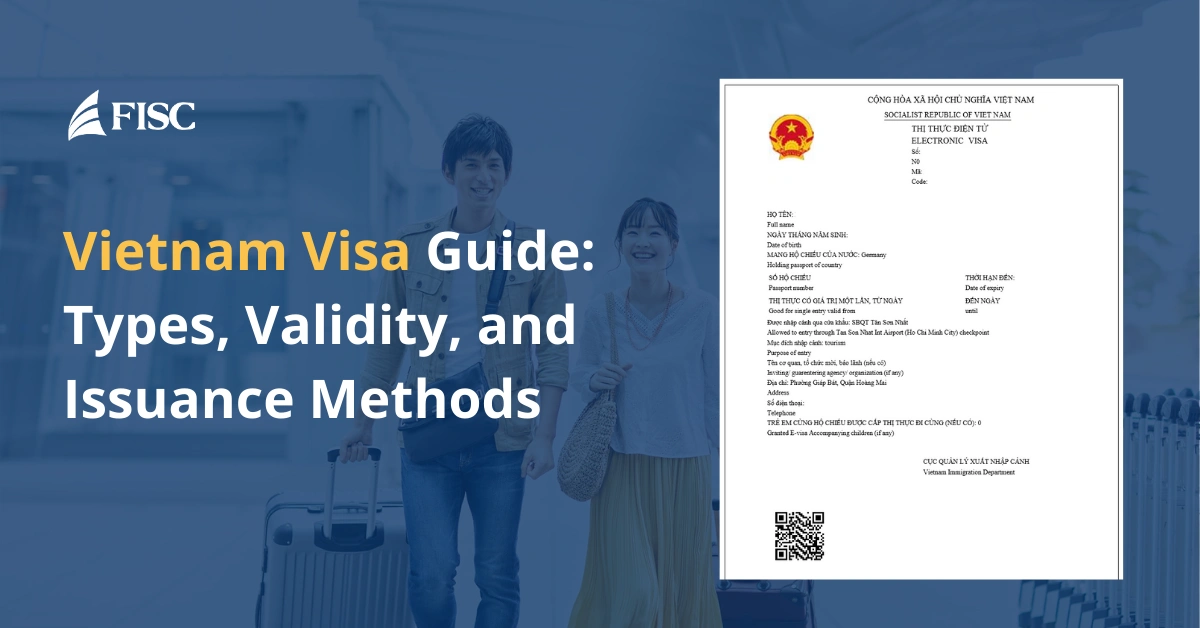
With Vietnam’s dynamic economic growth and vibrant culture, the country is becoming an increasingly attractive destination for foreigners—whether for tourism, work, business, or long-term residence. Securing a Vietnam visa is an essential step to enter and stay legally.
Vietnam currently offers a variety of visa types, each with its own duration, approval requirements, and documentation. Knowing the differences between them will help you choose the right visa, prepare your application correctly, and improve your chances of approval.
In this article, we’ll break down the most common Vietnam visas for foreigners, making it easier for you to find the option that best fits your needs.
Do I need a visa to visit Vietnam?
Whether you need a visa to visit Vietnam depends on your nationality, the purpose of your visit, and the length of stay
Citizens of certain countries can enter Vietnam without a visa for short stays (maximum 90 days) depending on the agreement. For example, citizens from ASEAN countries, South Korea, Japan, and some European countries may be eligible.
If you do not qualify for visa exemption, you will need to apply for a visa to enter Vietnam.
Types of Vietnam visa
Under Law 51/2019/QH14, visas are classified according to the purpose of entry, with each type designated by a specific code. Here are the 5 popular visa types for foreigners traveling to Vietnam
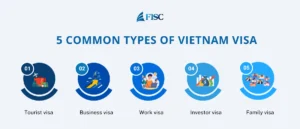
1. Tourist Visa (DL)
The tourist visa is designed for foreigners visiting Vietnam for sightseeing, leisure, or vacation purposes.
Validity: Maximum 90 days (single or multiple entries)
2. Business Visa (DN)
The business visa is intended for foreigners coming to Vietnam to conduct business activities, attend meetings, or work with Vietnamese companies. It includes two main categories:
- DN1: For foreigners working with Vietnamese enterprises or organizations that have legal status under Vietnamese law.
- DN2: For foreigners entering Vietnam to offer services, establish a commercial presence, or carry out other activities under international treaties to which Vietnam is a party.
Validity:
- 30 days (single or multiple entries)
- 90 days (single or multiple entries)
3. Work Visa (LĐ)
The work visa allows foreigners to enter Vietnam for lawful employment.
- LĐ1: Issued to foreigners working in Vietnam under a work permit exemption.
- LĐ2: Issued to foreigners working in Vietnam who are required to obtain a work permit.
Validity: Up to 2 years.
4. Investor Visa (ĐT1, ĐT2, ĐT3, ĐT4)
The investor visa is issued to owners, members of the board of directors, directors, or shareholders of foreign-invested companies in Vietnam.
Vietnam’s investor visas are divided into four categories:
- ĐT1: For foreign investors and representatives of foreign organizations investing in Vietnam with a capital contribution of 100 billion VND or more, or investing in sectors or locations eligible for special investment incentives as designated by the government.
- ĐT2: For foreign investors and representatives of foreign organizations investing in Vietnam with a capital contribution of 50–100 billion VND, or investing in sectors encouraged for development by the government.
- ĐT3: For foreign investors and representatives contributing 3–50 billion VND.
- ĐT4: For foreign investors and representatives contributing less than 3 billion VND.
Validity:
- ĐT1 & ĐT2: Up to 5 years
- ĐT4: Up to 12 months
- ĐT3: Up to 3 years
5. Family/Dependent Visa (TT)
The family visit visa is granted to foreigners who are the spouses or children under 18 of individuals holding visas with the following codes: LV1, LV2, LS, ĐT1, ĐT2, ĐT3, NN1, NN2, DH, PV1, LĐ1, or LĐ2.
Validity: Up to 1 year.
*Note: Foreigners who are the spouses or children of Vietnamese citizens may apply for a 5-year visa exemption certificate, which allows multiple entries into Vietnam without needing to apply for a visa each time.
Other types of Vietnam visas include:
| Visa types | Description | Validity |
| NN1 – NN2 | Issued to the heads of representative offices, branch offices, or projects of organizations, as well as to foreign nationals residing in Vietnam. | Maximum 12 months |
| NN3 | Issued to foreigners employed by international NGO, representative offices or branches of foreign organizations, and offices of foreign economic, cultural, or professional organizations in Vietnam. | Maximum 3 months |
| LV1 – LV2 | Issued to foreigners coming to Vietnam to work with government agencies or organizations under central or local authorities. | Maximum 12 months |
| DH | Issued to individuals coming to Vietnam for study or internship | Maximum 12 months |
| LS | Issued to foreign lawyers practicing in Vietnam | Maximum 5 years |
| NG1 – NG4 | Issued to high-ranking officials, members of diplomatic or consular missions and intergovernmental international organizations | Maximum 12 months |
| PV1 | Issued to journalists permanently based in Vietnam | Maximum 12 months |
| PV2 | issued to journalists working in Vietnam on a short-term basis | Maximum 12 months |
How to get a Vietnam visa
Foreigners may apply for a Vietnam visa from several options, depending on the type of visa and the applicant’s purpose of entry. Not every visa type can be applied for through all available methods, so it is important to check the correct procedure before preparing the application.
Common Vietnam visa application methods include:
- Visa issued at a Vietnamese Embassy or Consulate abroad: Applicants submit their documents directly at a Vietnamese diplomatic mission in their country of residence or another eligible location.
- Vietnam immigration department: For certain sponsored visa types, the inviting company, organization, or individual in Vietnam may need to submit the application directly to the Vietnam Immigration Department before the visa can be issued or extended.
- Visa on arrival (VOA): This option usually applies when the applicant is sponsored by a company or organization in Vietnam and has been granted an official approval letter. The visa is issued upon arrival at an international airport. To save time and avoid long queues, travelers may use the airport fast-track service to receive the visa stamp more quickly and proceed through the priority immigration counter.
- Vietnam eVisa: Applicable to citizens of all countries, allowing applicants to apply, pay, and receive their visa entirely online. This option is often suitable for tourism, short business trips, visiting family or friends, and other eligible short-term purposes.
Can the Vietnam visa be changed to a different purpose?
Changing a visa’s purpose means that Vietnamese immigration authorities update the stated purpose on a foreigner’s visa when the individual requests it and meets the legal requirements. Instead of leaving the country to apply for a new visa, foreigners can complete the procedure within Vietnam to switch to a visa that better reflects their actual purpose of stay.
According to Section 4, Article 7 of Law 51/2019/QH14, Vietnam allows visa purpose changes for foreigners in certain cases, including:
- Entering with an e-visa while holding a work permit or a work permit exemption.
- Having documentation proving a family relationship with a Vietnamese citizen or a foreigner residing in Vietnam.
- Having documents proving status as an investor or a representative of a foreign organization investing in Vietnam under Vietnamese law, allowing a switch to an investor visa.
- Being invited or sponsored by an organization to work in Vietnam, with a work permit or confirmation that a work permit is not required under labor law regulations.
When converting the visa, the immigration authority will cancel the old visa and issue a new visa or grant a temporary residence card if the applicant meets the requirements. However, not all types of visas are eligible for conversion, so foreigners should carefully review the conditions or seek support from a consulting service to avoid having their application rejected.
Vietnam visa requirements
Vietnam visa requirements vary depending on the visa type, nationality, and method of application (embassy/consulate, e-visa, or visa on arrival). This is intended as a general guide only.
– Passport: Must be valid for at least 6 months from the date of entry.
– Visa application form: Accurately filled out with all personal details, purpose of visit, and duration of stay.
– Photo: 2 recent 4x6cm photos with a white background, full face visible and no hat or glasses
– Supporting documents: Depending on the visa type, this may include
- Invitation letter (for business or family visas
- Work permit or approval for employment (for work visas)
- Proof of accommodation or hotel booking (for tourist visas)
- Investment documents (for investor visas)
Key takeaway
Obtaining a Vietnam visa is a crucial step for foreigners planning to enter the country for work, investment, or tourism. Understanding the different visa types, their validity periods, and key entry requirements ensures a smoother application process and helps avoid rejection issues.
However, the varying procedures for each visa type and potential language barriers can make the process challenging. Partnering with a reputable Vietnam visa service can simplify the process, making it faster and fully compliant with regulations.
With 38 years of experience and a team of seasoned experts, FISC stands out as a trusted Vietnam visa agency. From consultation and document preparation to application submission and visa issuance, our comprehensive services ensure a seamless, efficient, and stress-free Vietnam visa process for foreigners.