
Vietnam is becoming a familiar destination for many foreign businesspeople, investors, and professionals thanks to its stable economic growth and expanding business environment. In this context, a business visa plays an important role as an entry document that allows foreigners to work, cooperate, and carry out business activities legally in Vietnam.
So who is eligible to apply for a Vietnam business visa? What types are available? What is the application process? This article gives you a complete overview of business visas in Vietnam, including visa classification, key requirements, application procedures, and practical notes to help your application be processed more smoothly and efficiently.
What is a Vietnam business visa?
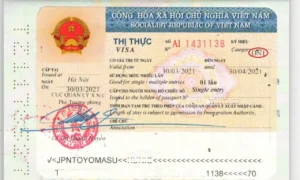
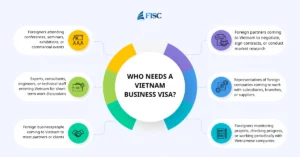
A business visa, also known as a commercial visa or work-trip visa, is a type of visa issued to foreigners entering Vietnam for business purposes, such as business trips, partner meetings, market research, conferences, or short-term work.
Under Law No. 51/2019/QH14, Vietnam business visas are divided into two types:
- DN1 visa: Issued to foreigners who come to Vietnam to work, cooperate, or conduct transactions with a legally established entity in Vietnam, including domestic companies, foreign-invested enterprises, representative offices, branches of foreign organizations in Vietnam, or international organizations and non-governmental organizations (NGOs) licensed to operate in Vietnam.
- DN2 visa: Issued to foreigners entering Vietnam to offer services, establish a commercial presence, or carry out activities under international treaties to which Vietnam is a member.
Business visa vs working visa: which one do you need?
Many people confuse a business visa with a work visa because both are related to work activities in Vietnam. However, these two visa types serve different purposes.
A business visa is suitable for business trips, commercial activities, partner meetings, or short-term work under an invitation or sponsorship from a company. Meanwhile, a work visa applies to foreigners who work officially and long-term for a company in Vietnam and requires a work permit or work permit exemption.
| Situation | Business visa | Work visa |
| Meeting partners or clients | Suitable | Not required |
| Attending meetings, events, or short-term business discussions | Suitable | Not required |
| Working officially for a company in Vietnam | Not suitable | Required |
| Receiving salary from an employer in Vietnam | Not suitable | Required |
Validity of a Vietnam business visa
Under current regulations, both DN1 and DN2 business visas are valid for a maximum of 3 months. However, in practice, the validity granted will depend on the purpose of entry, the company’s business field, the foreigner’s immigration history, and the specific assessment of the Vietnam Immigration Department for each application.
In addition to validity, visas are also classified by the number of entries:
- Single-entry visa: Valid for one entry only. Once the foreigner leaves Vietnam, the visa immediately expires.
- Multiple-entry visa: Allows the foreigner to enter and exit Vietnam multiple times during the visa validity period.
Conditions for obtaining a Vietnam business visa for foreigners
To be granted a DN1 or DN2 business visa, both the foreigner and the sponsoring company in Vietnam must meet the conditions under Law No. 47/2014/QH13.
For the foreigner
The foreigner must:
- Have a passport valid for at least 6 months from the intended entry date.
- Not be prohibited from entering Vietnam under Article 21 of Law No. 47/2014/QH13.
- Have an invitation letter or sponsorship approval from a Vietnamese company.
- Have an entry purpose that matches the requested business visa type. For example, a tourist visa should not be used for commercial or technical work activities.
For the sponsoring company
The sponsoring company must:
- Have legal entity status and be established and operating in accordance with Vietnamese law.
- Have registered an electronic account with the Vietnam Immigration Department to submit entry approval applications online.
- Have a genuine need to invite the foreigner to Vietnam for work or cooperation.
- Comply with legal obligations related to labor and immigration, including managing the foreigner’s temporary residence after entry under a business visa.
Procedures for applying for a Vietnam business visa for foreigners
Currently, the procedure for applying for a business visa for foreigners can be carried out in three ways:
- Applying for an electronic visa (evisa)
- Receiving the visa at a Vietnamese Embassy or Consulate overseas
- Receiving the visa at an international airport in Vietnam
In practice, many standard cases can apply for a commercial evisa because the procedure is simpler. However, for certain key nationalities, applications requiring clear sponsorship, complex entry purposes, or cases where the entry checkpoint needs to be controlled, an entry approval letter may still be the more suitable option.
Below is the application process for each method.
Process for applying for the business evisa
Step 1: Check evisa eligibility
A commercial evisa only applies to foreigners who meet the requirements for obtaining a Vietnam electronic visa. If the foreigner belongs to a nationality group that requires careful review, has previously been refused a visa, or has previously overstayed a visa, they may need to apply for an entry approval letter instead of submitting an evisa application.
Step 2: Prepare information and submit the evisa application
The foreigner needs to prepare a passport photo, portrait photo, expected entry date, expected exit date, address in Vietnam, entry/exit checkpoint, and contact information of the Vietnamese company.
Step 3: Receive and check the evisa result
After the evisa is issued, the foreigner needs to download the result file and carefully check all information. If there is any mistake, it should be handled before the flight.
When entering Vietnam, the foreigner needs to bring a printed copy of the evisa to present when requested.
Process for applying for the business visa at a Vietnamese Embassy/Consulate overseas
Step 1: The sponsoring company prepares the application in Vietnam
The application includes:
- The company’s tax reports for the last 3 months
- Company signage and photos of the working office
- Office lease agreement
- Company business license
- Passport data page of the foreigner
- Intended entry/exit date
- Work schedule
If the entry approval application is approved, the Vietnam Immigration Department will issue the entry approval letter to the sponsoring company and fax the visa stamping approval to the registered Vietnamese Embassy or Consulate.
Step 2: Prepare documents for commercial visa stamping
After receiving the entry approval letter, the sponsoring company will send it to the foreigner. The foreigner needs to print the approval letter and prepare the following documents for visa stamping:
- Visa application form as required
- Original passport
- Portrait photo
- Visa stamping fee, depending on the Vietnamese Embassy or Consulate
- Other documents as required by the Vietnamese Embassy or Consulate
Step 3: Visa stamping
The foreigner will submit the required documents directly to the registered Vietnamese Embassy or Consulate. Once the visa is issued, it will be stamped into the foreigner’s passport.
Procedure for obtaining a business visa on arrival at a Vietnamese airport
The procedure for obtaining a commercial visa at the airport is almost similar to the process for obtaining a commercial visa at a Vietnamese Embassy or Consulate. However, instead of getting the visa stamped at a Vietnamese diplomatic mission overseas, the foreigner will get the visa stamped at a Vietnamese airport upon entry for work or business purposes.
Step 1: Apply for an entry approval letter
The sponsoring company in Vietnam will submit the application for an entry approval letter to the Vietnam Immigration Department and send the result file to the foreigner for entry preparation.
Step 2: Prepare documents for visa stamping
The foreigner needs to prepare:
- Printed copy of the entry approval letter
- Visa application form completed with all required information, signed and attached with a photo as required
- Original passport
- Visa stamping fee:
- USD 25 for a single-entry visa
- USD 50 for a multiple-entry visa
Step 3: Get the visa stamped at a Vietnamese airport
When arriving at a Vietnamese airport, the foreigner goes to the visa issuing area at the airport, presents the required documents to the immigration officer, pays the stamping fee, and receives the DN1/DN2 visa stamped into the passport.
After completing the visa stamping step, the foreigner continues with the immigration procedure in Vietnam according to regulations. For businesspeople with busy schedules or first-time travelers entering Vietnam under the visa-on-arrival method, the airport fast track service can help make the visa collection, queueing, and immigration process more convenient.
Optimize your Vietnam entry journey with FISC
A Vietnam business visa is a suitable option for foreigners who want to come to Vietnam to conduct market research, meet partners, or expand cooperation opportunities. However, due to complex procedures and strict legal requirements, working with a professional service provider is important to help the visa application process run quickly and smoothly.
With more than 40 years of experience supporting companies and foreigners, FISC is proud to be a trusted partner in visa and immigration consulting in Vietnam. From advising on the suitable visa type, preparing documents, tracking the application, and completing the procedure, we support you through every step. Contact FISC today for fast and free consultation.
Frequently asked questions
Can I work long-term in Vietnam with a business visa?
No. A business visa only allows foreigners to enter Vietnam to carry out activities such as market research, attending meetings, signing contracts, or working with partners.
If a foreigner plans to work long-term or hold an official position in Vietnam, they need a work permit or work permit exemption certificate, depending on the specific case. After that, they should apply for a temporary residence card or suitable work visa to reside and work legally in Vietnam.
Working in Vietnam with only a business visa may be considered using the visa for the wrong purpose and may lead to penalties under the law.
What happens if a business visa is used for the wrong purpose?
Foreigners who use a DN visa for inappropriate purposes, such as long-term work without a work permit, residence, or personal business activities, may be considered to have violated the law. Consequences may include:
Administrative fines: Under Decree 144/2021/ND-CP, fines may range from VND 3,000,000 to VND 5,000,000 for minor or first-time violations, and from VND 15,000,000 to VND 25,000,000 for working without a permit, illegal stay, or activities inconsistent with the visa purpose. The sponsoring company may also be fined if it fails to control the entry purpose.
Deportation and entry ban: In cases of serious violations or repeated violations, immigration authorities may issue a deportation decision and ban entry for 1 to 5 years under Law No. 47/2014/QH13.
No visa extension or conversion: Violators are usually not allowed to extend or convert to another visa type and must leave Vietnam and apply again from the beginning, causing work disruption and additional costs.
Impact on the sponsoring company: The company may be recorded as having a violation, face difficulties when applying for DN visas for other partners, be subject to unexpected inspection, and suffer reputational, time, and financial losses.
Can the purpose of a Vietnam business visa be converted?
Under Law No. 51/2019/QH14 amending the Law on Entry, Exit, Transit and Residence of Foreigners in Vietnam, a DN visa can be converted to another type of Vietnam visa only in specific cases:
- Work visa (LD1, LD2): When the foreigner has obtained a work permit or work permit exemption certificate.
- Investor visa (DT): When the foreigner becomes an investor, contributes capital to a company in Vietnam, and has an investment/business registration certificate.
- Family visit visa (TT): When the foreigner is the spouse or family member of a Vietnamese citizen or of a foreigner who is working or studying in Vietnam.
On the other hand, a DN visa cannot be converted if it has expired, the purpose of use is unclear, there is no new legal sponsoring entity, or the residence and work permit documents are incomplete. In these cases, the foreigner must leave Vietnam and apply for a new visa under the correct purpose.
Can a Vietnam business visa be extended?
Yes. A business visa can be extended in Vietnam if all legal conditions are met. Under Law No. 47/2014/QH13, a foreigner who is legally staying in Vietnam may be considered for a DN visa extension when:
- There is a legal sponsoring organization continuing to act as sponsor.
- The entry purpose has not changed.
- The foreigner has not violated residence or immigration regulations.
- The current visa is still valid or has only expired for no more than 10 days with a valid reason.
The extension procedure can be carried out in Vietnam without the foreigner having to exit the country, helping save time and costs for both the individual and the company.