
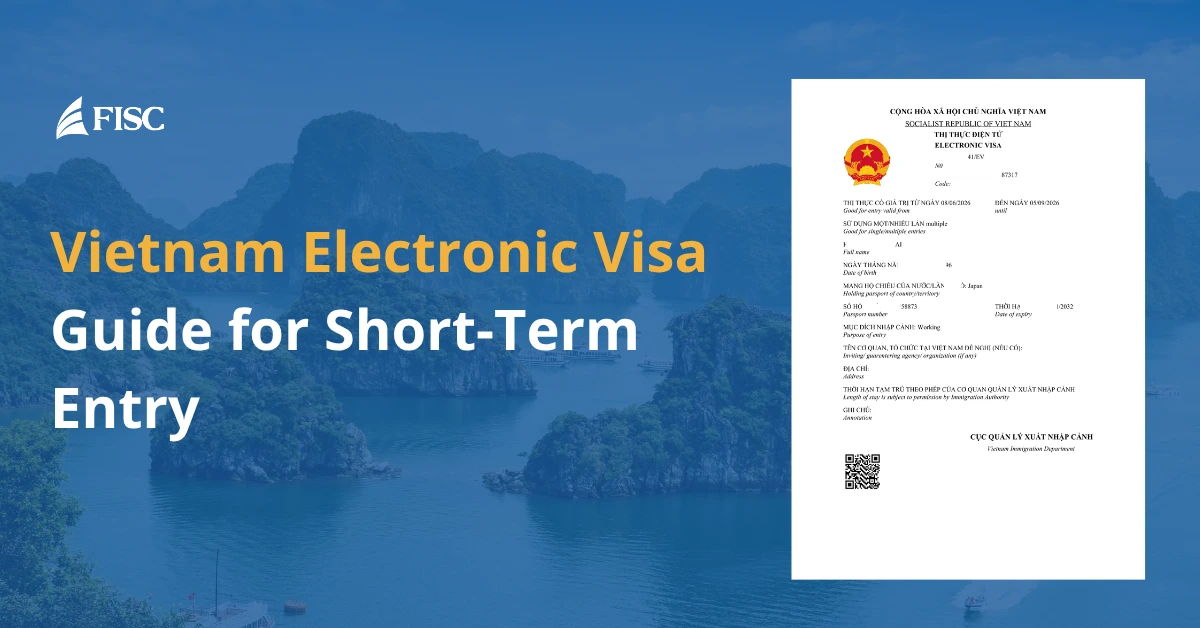
A Vietnam evisa is one of the most convenient ways for foreigners to enter Vietnam for tourism, business trips, short-term work-related visits, or visiting family and friends. It can be applied, pay and receive the visa online, making the entry process more convenient for many short-term travelers.
This guide explains how the Vietnam e visa application works, including eligibility, fees, processing time, entry ports, required documents, and when another visa type may be more suitable.
What is a Vietnam evisa?
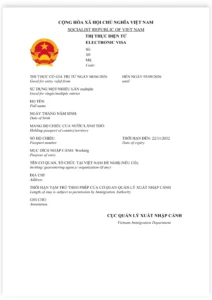
A Vietnam evisa is an electronic visa issued online by the Vietnam Immigration Department. Instead of visiting a Vietnamese embassy or consulate, eligible foreigners can submit their visa application online, pay the fee electronically, and receive the visa result through the evisa system.
This visa option is generally suitable for foreigners entering Vietnam for tourism, business trips, or short-term visits to family and friends.
From 15 August 2023, under Resolution No. 127/NQ-CP, Vietnam officially expanded the issuance of electronic visas to citizens of all 257 countries and territories. The evisa can be valid for up to 90 days, and applicants may choose either single entry or multiple entries, depending on their travel plan.
*Note: For those entering Vietnam for employment, investment, or long-term residence, it is important to review the appropriate Vietnam visa type before applying. Depending on the purpose of entry, the applicant may need a working visa (LD), business visa (DN), investor visa (DT), or family visit visa (TT). Choosing the correct visa type can make later procedures easier, especially when applying for a work permit, work permit exemption, or temporary residence card.
Who can apply for a Vietnam electronic visa?
Foreigners can apply for a Vietnam evisa if they meet the basic requirements below:
- The applicant must be outside Vietnam at the time of application.
- The applicant must hold a valid passport.
- The applicant must not fall under the cases of entry suspension under Article 21 of the Law on Entry, Exit, Transit and Residence of Foreigners in Vietnam.
Some nationalities may require additional review before submitting a Vietnam electronic visa application. Depending on the case, the applicant may need to provide additional documents or have the application reviewed under a separate process before confirming whether an evisa application can be submitted.
Below is the list of high-review nationalities that usually need to be checked carefully before applying for a Vietnam evisa:
| Number | Country |
| 1 | Afghanistan |
| 2 | Bangladesh |
| 3 | Cameroon |
| 4 | Congo |
| 5 | Ghana |
| 6 | Iran |
| 7 | Iraq |
| 8 | Lebanon |
| 9 | Liban |
| 10 | Mozambique |
| 11 | Nigeria |
| 12 | Pakistan |
| 13 | Sierra Leone |
| 14 | Sri Lanka |
| 15 | Sudan |
| 16 | Syria |
| 17 | Turkey |
| 18 | Yemen |
Where can foreigners enter Vietnam with an evisa?
Foreigners using a Vietnam electronic visa may only enter and exit Vietnam through the following approved ports of entry and exit.
| Airports | Land border gates | Seaports |
| Cam Ranh International Airport | Binh Hiep Border Gate, Tay Ninh | An Thoi Port, An Giang |
| Can Tho International Airport | Bo Y Border Gate, Kon Tum Province | Ben Luc Port, Tay Ninh |
| Cat Bi International Airport | Cau Treo Border Gate, Ha Tinh Province | Ca Na Port, Khanh Hoa |
| Chu Lai International Airport | Cha Lo Border Gate, Quang Binh Province | Cam Pha Port, Quang Ninh Province |
| Da Nang International Airport | Dinh Ba Border Gate, Dong Thap | Chan May Port, Thua Thien Hue Province |
| Dong Hoi Airport | Dong Dang Railway Border Gate, Lang Son Province | Cua Lo – Ben Thuy Port, Nghe An |
| Gia Binh International Airport, applicable once it is officially put into operation | Ha Tien International Border Gate, Kien Giang Province | Cua Viet Port, Quang Tri |
| Lien Khuong Airport | Huu Nghi Border Gate, Lang Son Province | Da Nang Port, Da Nang City |
| Long Thanh International Airport, applicable once it is officially put into operation | La Lay International Border Gate, Quang Tri Province | Diem Dien Port, Hung Yen Province |
| Noi Bai International Airport | Lao Bao International Border Gate, Quang Tri Province | Dong Thap Port, Dong Thap |
| Phu Bai International Airport | Lao Cai International Border Gate, Lao Cai Province | Dung Quat Port, Quang Ngai Province |
| Phu Cat Airport | Lao Cai Railway Border Gate, Lao Cai Province | Duong Dong Port, Kien Giang Province |
| Phu Quoc International Airport | Le Thanh Border Gate, Gia Lai | Giao Long Port, Vinh Long |
| Tan Son Nhat International Airport | Long Sap Border Gate, Son La | Gianh Port, Quang Tri |
| Tho Xuan Airport | Moc Bai International Border Gate, Tay Ninh Province | Hai Phong Port, Hai Phong City |
| Van Don International Airport | Mong Cai International Border Gate, Quang Ninh Province | Hai Thinh Port, Ninh Binh Province |
| Vinh International Airport | Nam Can International Border Gate, Nghe An Province | Ho Chi Minh City Port, Ho Chi Minh City |
| Na Meo International Border Gate, Thanh Hoa Province | Hon Chong Port, An Giang | |
| Nam Giang Border Gate, Da Nang | Hon Gai Port, Quang Ninh Province | |
| Tan Nam Border Gate, Tay Ninh | Hon La Port, Quang Tri | |
| Tay Trang International Border Gate, Dien Bien Province | Ky Ha Port, Da Nang | |
| Thanh Thuy Border Gate, Tuyen Quang | Lien Huong Port, Lam Dong | |
| Thuong Phuoc Land/River Border Gate, Dong Thap | My Thoi Port, An Giang | |
| Tinh Bien International Border Gate, An Giang Province | Nam Can Port, Ca Mau | |
| Tra Linh Border Gate, Cao Bang Province | Nghi Son Port, Thanh Hoa Province | |
| Vinh Xuong International Land and River Border Gate, An Giang Province | Nha Trang Port, Khanh Hoa Province | |
| Xa Mat International Border Gate, Tay Ninh Province | Ninh Binh Port, Ninh Binh Province | |
| Ninh Chu Port, Khanh Hoa | ||
| Phu Quy Port, Lam Dong | ||
| Quy Nhon Port, Binh Dinh Province | ||
| Sa Ky Port, Quang Ngai | ||
| Soai Rap – Hiep Phuoc Port, Dong Thap | ||
| Son Duong Port, Ha Tinh | ||
| Thuan An Port, Hue | ||
| Truong Long Hoa Port, Vinh Long | ||
| Van Gia Port, Quang Ninh Province | ||
| Vung Ang Port, Ha Tinh Province | ||
| Vung Ro Port, Dak Lak | ||
| Vung Tau Port, Ho Chi Minh City, formerly Ba Ria – Vung Tau |
Step-by-step Vietnam e visa application process
The Vietnam e visa application is submitted online. The basic process is as follows.
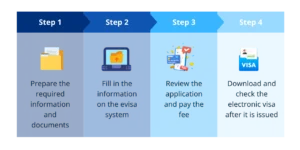
Step 1: Prepare your passport and travel details
Before starting the application, make sure your passport should be valid for the intended travel period and prepare the following:
- Passport data page image: clear, readable and show the full information page
- Portrait photo: white background, looking straight at the camera, without glasses and hats
- Travel information: Expected entry date, exit date, address in Vietnam, and entry/exit port.
Step 2: Complete the online form
The applicant must upload a clear image of the passport data page and a portrait photo and fill in the required personal, passport, and travel information.
Step 3: Review the application and pay the fee
Before submitting the evisa application, the applicant should carefully review all information entered in the form. This step should be checked carefully because mistakes such as an incorrect full name, wrong passport number, incorrect nationality, wrong entry date, or wrong port of entry may affect the application result. In many cases, if the submitted information is inaccurate, the foreigner may need to submit a new application.
Once the application is confirmed, the system will generate an application code, which can be used later to check the evisa status.
The electronic visa fee must be paid online. The current evisa fee is USD 25 for a single-entry visa and USD 50 for a multiple-entry visa.
Step 4: Get the result
Once the application is approved, the foreigner should download the electronic visa, review all information shown on the evisa, and print it out for presentation upon entry into Vietnam.
In general, the evisa result may be issued after around 3 working days. However, the processing time can vary depending on application volume, weekends, or public holidays. To avoid disruption to the travel schedule, applicants should submit their application around 2 weeks before the intended entry date.
*Notes:
- The electronic visa fee is non-refundable. Applicants should therefore check all information carefully before submitting the application and making payment.
- The port of entry stated on the electronic visa cannot be changed after the application has been submitted or after the visa has been issued. If the applicant wants to change the port of entry, a new visa application must be submitted.
- Each electronic visa application applies to one foreigner only. If several people are entering Vietnam together, each person must submit a separate application.
- Foreigners entering Vietnam through an international airport may consider using the airport fast track service to save time and complete the entry process more conveniently.
- From April 15, 2026, international passengers arriving at Tan Son Nhat International Airport (SGN) must complete the online arrival declaration via the Immigration Department’s system before proceeding to immigration control.
How to check Vietnam evisa status after submission
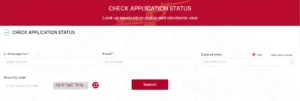
While waiting for the result, the applicant can check the processing status of their evisa online through the lookup link sent to their email after completing the application form. The applicant only needs to access the link and enter the required verification code to check the application result.
Should you apply for a Vietnam evisa yourself or use a support service?
Foreign travelers can apply for a Vietnam eVisa on their own if their information is clear, their travel schedule is flexible, and they are familiar with online applications. However, for those with flights approaching soon, applicants who have previously faced errors in their visa details, or companies managing multiple applications at once, using a professional support service helps minimize risks and ensures timely processing.
With nearly 40 years of visa expertise, FISC provides reliable assistance in preparing Vietnam eVisa applications and offers expedited handling, delivering results in just one day.
If you need a Vietnam eVisa for your upcoming trip, contact FISC to have your application reviewed and receive fast, accurate support so your visa is ready before your departure.
FAQs
How much does a Vietnam e-visa cost?
According to the official e-visa portal, the fee is 25 USD for a single-entry e-visa and 50 USD for a multiple-entry e-visa. This fee is non-refundable if the application is not approved.
How long does it take to get a Vietnam e-visa?
Applications are processed within about 3 business days after the fee is paid. However, actual processing time may vary if the application requires further review, contains unclear information, or is submitted close to weekends or public holidays.
Can incorrect information on an e-visa application be corrected?
It depends on the specific error and the status of the application. In many cases, applicants may need to submit a new application. For this reason, applicants should carefully check their passport details, entry date, nationality, and visa type before making payment.
Can an e-visa be extended in Vietnam?
No, e-visas cannot be extended. Foreign nationals who wish to continue staying legally can consider a visa run – exiting and re-entering Vietnam to reset their permitted stay. With FISC’s expedited e-visa service, applications can be processed and results issued the same day, making it suitable for cases that need to renew their stay urgently before their current visa expires.
Do I need to print my e-visa before entering Vietnam?
Travelers should print their approved e-visa and carry it when entering the country. It’s also recommended to keep a digital copy on your phone or email in case it’s needed for verification.